Sunday, May 30, 2010

Costa Rica Field Work

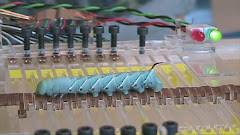
It's been over a month since I last updated my blog. I truly apologize for those who follow my blog. But honestly, this is my first chance since mid April to catch a breath and log in to my blog. In any case, I'm currently in Costa Rica for a field work, tracking down an amazing collection of caterpillars in the tropics. Pictures and field work journals will follow. Stay tuned in the next 10 days.

The week before I set off to Costa Rica, I questioned myself once about this trip. What exactly do I expect to get out of the forests? Do I really need so many projects for my Ph.D? With two manuscripts pending and an international conference travel coming up, setting up my first field work at a distant foreign place was the last thing I needed. However, as my adviser and I arrived at the Area de Conservación Guanacaste, Costa Rica, my doubt dissolved instantly. It is totally worth the sleepless April and May. For the following week, I will be posting my field work journal. They all consist of two paragraphs. The first one contains something about my field experience. In the second paragraph you will find some portraits of what I saw in the field and animal interactions. For my research, I will focus on locomotion in different caterpillars and some associated behaviors.

Tuesday, April 20, 2010

For those who track 3D

Folks in the field of animal locomotion would know how kinematics data are usually obtained. But allow me to summary the general procedure in a few sentences. To track anything in 3D, at least two camera views have to be available at all time. After space calibration, one can calculate the 3D configurations of the objects in the analysis software of his/her choice. Ideally, video tracking can use any inherent features of the subject. However, to facilitate automatic tracking, high contrast makers are often attached to the subject. Infrared markers offer a way to highlight the features of interest without compromising the lighting for the normal video acquisition. After I created two families of soft-bodied robots, I was challenged by the need of quantitative data. These kinematics data are critical for any mechanical analysis on the robot locomotion.I set up our VICON 3D system to track my robot kinematics at Tufts Advanced Technology Laboratory. VICON is a company that makes 3D tracking systems for research in locomotion and animation industry. It employed several near infrared high speed cameras which would detect the IR signals coming off the retro-reflective markers attached to the subject. Unfortunately, retro-reflective marking is really not the way to track small animals such as insects or robots of the same scale. After going through many types of IR florescent chemicals, I finally decided to go with semi-conductor IR emitters (or infrared LEDs).
This works out really great for my application because I do not need to worry about IR light flooding or bad camera focus. These surface mount IR emitters produce point-source lighting smaller than 1mm. The IR cameras pick them up like many distant stars. In fact, a little out of focus actually increase the pixel numbers from which the centroid positions are derived.
Data are coming alright, but my data crunching techniques are still too slow for the rate by which these high speed cameras acquire data. I better work on that!

Friday, April 2, 2010

Gait transition and embeded AI

A couple of years back, I was deeply impressed by probably the most well-known bio-inspired robot which demonstrated the effects of central pattern generator on gait transitions. This is the EPFL salamander robot with coupled non-linear oscillators. In this research amphibious robot, smooth gait transitions were accomplished by tuning the gain of oscillators coupling.

As I started working on soft-bodied robots, I discovered that many non-linear characteristics of the soft materials and actuators can be exploited to engineer behaviors. So I took a completely different approach to robot control. Instead of programming complex behaviors on a micro-processors, I "tuned" the body and actuators so they create desirable behaviors when I switch on a behavioral circuit. Amazingly, when the motor variations and body properties reach a certain domain, the robot was able to achieve gait transitions with a simple scaling of motor-pattern. This is a very intriguing demonstration because it provokes a rather radical inquiry: how much logic/intelligence can we embed in a piece of material? To what extent can we use morphing morphologies to perform computation (or thinking if you will)?

Thursday, April 1, 2010

Multi-threading...

A lot has happened in the past few weeks. Besides my secondary injury during my recovery of my bone fracture, everything else seems to progress in a positive direction.

First of all, my paper on caterpillar ground reaction forces was finally printed. It's been really over-due for a year now. Most data were collected by Christmas 2008, and I actually presented the major finding at the SICB 2009 January. I felt pretty bad about this delay but the robotics project last year really took my life from March through October. To summarize the findings in a few sentences: large caterpillars such as Manduca sexta load their bodies in constant tension when they are attached to a substrate. Locomotion was achieved by progressing the body tension/deformation forward. Biomechanically speaking, these critters use the substrate as their external skeletons. We call this strategy: environmental skeleton. For more details on this radical view of soft-bodied animal body control, check out the April 1st issue of the Journal of Experimental Biology. If you would like a PDF copy of my paper, simply e-mail me at huai-ti.lin@tufts.edu and I will gladly send you one.

Besides my old new paper, I've been planning a field trip to Costa Rica for this May and June. Last spring at the SICB conference, I bought a few books about caterpillars. Among them, I was really impressed by a couple of books regarding tropical caterpillar diversity. So I contacted the authors Dr. Daniel Janzen et al and was struck by the idea of visiting the home of caterpillars in the wild. Lab animals are always somewhat unnatural. This idea was incubated in the back of my mind for many months until I finally formulated it into a more concrete field study project. My mentor Dr. Barry Trimmer was very supportive of the idea and quickly decided to make it happen. In any case, we have now arranged a 17 days field work at a conservation in Santa Rosa, collaborating with Dr. Janzen's team from UPenn.

Finally, to continue the imaging theme from last time, let me share a few images from our histology for Manduca caterpillars. Working together with my great undergraduate lab-mate Dan, we've been able to produce very clean cross-sections of caterpillar abdomens.Through some imaging techniques, we can enhance the cuticular folds.Or we can also highlight the muscles! So awesome... the biology I mean (but we're not bad either)

Monday, March 15, 2010

Take a hard look at the soft morpholgies

Every so often when I need to get some details about the caterpillars, I would do some electron microscopy. I especially love to browse specimens under a good scanning electron microscope (SEM). It feels like entering a different world: a microscopic one.

Recently I decided to look at more surface features of Manduca caterpillar bodies with SEM. This time I wanted to explore the folding structures on the soft cuticle.

The first thing I noticed was how hairy these cute caterpillars really are. No wonder people call caterpillars "fussy worms" in tropical Taiwan where I grew up. If vision is weak and proprioception is irrelevant, then tactile sensing must be dominant.

Then I couldn't help focusing my electron beam on the spiracles.... well, they look like tiny stadium to me. This the the hairs around the air slit can't be for tactile functions, or are they?
I think these are hairs that help repel moisture and particles to keep the air flow smooth. Maybe I should look into the literature.

Finally, I must show you at least one image of the crochets (microscopic claws) on the caterpillar prolegs. They are simply gorgeous!! I got many more images with higher magnification, but it's hard to explain what you are looking at in such close-up photos. This image was actually taken three weeks ago.
These caterpillars relay on these double array of crochets to grip on to any substrate. When a proleg retracts, these crochets are pulled into the cuticle pocket on the left side of the image. And the whole leg closes like a purse to prevent any unwanted hooking. It's so simple but reliable. I wonder if there is any better strategies for controlling these hooks array with large surface deformation... (another long night of restless dream)

Monday, March 1, 2010

Morphing Morphologies...

Some people asked me how I got into rolling locomotion from soft-bodied animals. This is actually a subtle point which perhaps I didn't make it explicit in my previous post. Although my current study system is one without any well-defined articulation, my interest is really about morphologies that function through morphing. All animals in the wild have to undergo dramatic transformation to switch the mode of locomotion (e.g. from crawling, swimming, running or whatever to wheeling/rolling). Their bodies are definitely morphing morphologies.

Similarly, soft-bodied robot can be defined by its ability to morph regardless of its material. Indeed, the definition of "soft-bodied robot" has been a indefinite argument in my research group. What is really considered "soft"? Isn't it all relative?

After four years of contemplation, I have only recently come to the conclusion that a soft-bodied robot is a robotic device that can conform to the environment without active control. In other words, soft-bodied robots do not maintain any definite posture. Instead they allow the environment to determine its shape in conjunction with the internal control of body properties. This definition was really an inspiration from my study of caterpillar locomotion. Proprioception (perception of body posture) is therefore insignificant by definition. If we translate this definition of soft-bodiedness back to the animal kingdom. A true soft-body is one that does not force any posture. This will exclude all the hydrostatically controlled bodies especially muscular hydrostats. How heretic? Octopus arms are not soft? Well, we must also recognize that tissues can be tuned to different states. An octopus arm can be a very well-controlled muscular hydrostat when performing a manipulative task but highly compliant when relaxed. From this concept, I urge the biology community to take on more specific terms when describing animals or organismic bodies:

Articulated body [lever-linkage system with joint actuation]
Celumic hydrostat [the pressurized fluid-filled body as a skeleton]
Muscular hydrostat [muscles as the skeleton and actuators]
Environmental skeleton [substrate as skeleton on which muscles act]

Sunday, February 14, 2010

A short review of rolling locomotion

For my rolling GoQBot publication, I've been doing literature reviews and dug out some interesting information about animals with rotary locomotion. While I wrote a formal literature review in my manuscript, here allow me to share my thrills in a visually guided relaxed format! For in depth information, see my list of references at the end of the post.

The earliest documented rotary locomotion I could find was from this shrimp like creature living on sandy beaches. It has short legs specialized for swimming. So when there is no water, they flip on their backs and performed a slow body rolling motion (Caldwell 1979).Of course, a much more dynamic gymnast has to be this somersaulting spider in Sahara desert. This little guy can perform amazing somersaults across the dessert sand after a running start up to 2 m/s, according to the discoverer Dr. Ingo Rechenberg. Check out some of his videos on YouTube: Short intro; Extended
Despite the amazing gymnastic moves, the above two creatures don't really roll in a circular form. The stomatopod really just flips its body by reaching the head with the tail, and the somersaulting spider actually got airborne in their strides. A true wheel is one that relies on the continuous contact of same radius spokes. The following two examples are animals that form quite perfect circles for downhill passive rolling. They are really very cute and circular... (Henschel 1990, 1995; Garcia-Paris et al 1995)Finally, the true powered wheeler is still my favorite rolling mother-of-pearl caterpillar. These caterpillars would curl into a wheel ballistically and catapult themselves into free-wheeling objects when disturbed (Bruckenbury 1997, 1999). According to the scientist who characterized this motion Dr. John Bruckenbury, there are a few more species of caterpillars that perform this behavior. It's really quite an effective way to escape. [pictures below are from Bruckenbury 1997 publication]
Armour, R. H. and Vincent, J. F. V. (2006). Rolling in Nature and Robotics: A Review. Journal of Bionic Engineering 3, 195-208.

Brackenbury, J. (1997). Caterpillar Kinematics. Nature 390, 453.

Brackenbury, J. (1999). Fast Locomotion in Caterpillars. J. Insect Physiol. 45, 525-533.

Deban, S. M. (1995). A Novel Antipredator Mechanism in Salamanders: Rolling Escape in Hydromantes Platycephalus. J. Herpetol. 29, 149-151.

Full, R., Earls, K., Wong, M. and Caldwell, R. (1993). Locomotion Like a Wheel? Nature 365, 494.

Gould, S. J. (1981). Kingdoms without Wheels. Natural History 90, 42-48.

LaBarbera, M. (1983). Why the Wheels Won't Go. Am. Nat. 121, 395-408.

Siegwart, R., Lamon, P., Estier, T., Lauria, M. and Piguet, R. (2002). Innovative Design for Wheeled Locomotion in Rough Terrain. Robotics and Autonomous systems 40, 151-162.